2026 Condo Financing Changes: What Portland Veteran Buyers Need to Know Before Buying a Condo
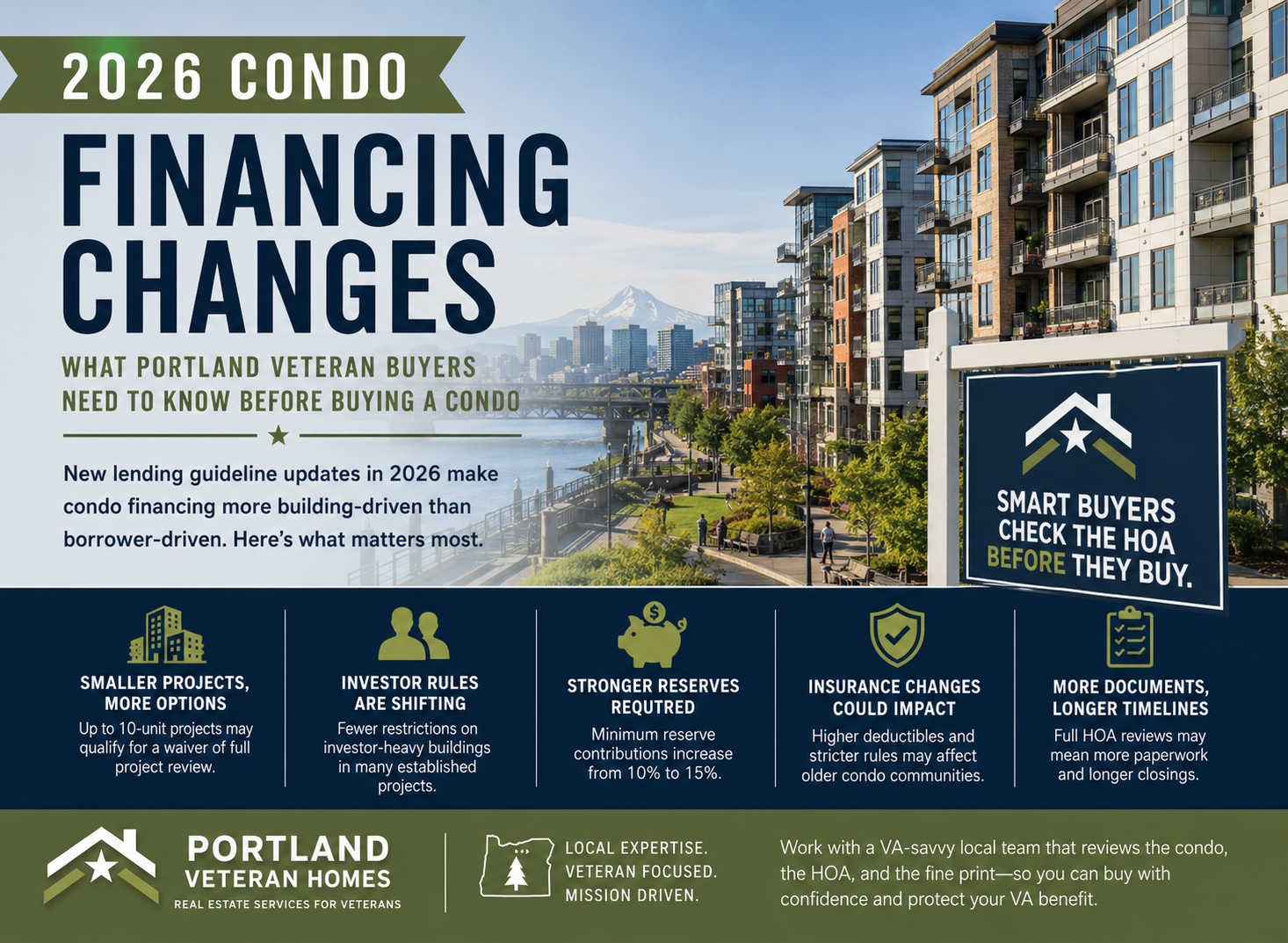
If you’re a veteran planning to buy a condo in Portland or the surrounding metro area in 2026, new lending guideline changes could affect your purchase, financing options, and future resale value.
While many of these updates are tied to conventional condo financing guidelines, they still matter for VA buyers. HOA financial health, insurance requirements, reserve funding, and future marketability are becoming more important than ever.
That means even highly qualified veteran buyers with strong VA eligibility need to pay close attention to the condo association itself.
VA financing remains one of the strongest home loan programs available, offering major advantages for eligible veterans and active-duty buyers.
But condos are different. With condo purchases, financing approval often depends just as much on the HOA’s reserves, insurance coverage, budget, and project condition as it does on the buyer.
One of the biggest improvements is that projects with up to 10 units may now qualify for a waiver of full project review. Previously, many of these exceptions were mostly limited to projects with four units or fewer.
Older lending guidelines often restricted financing when investor ownership exceeded 50% of the building. Many of those limitations are being relaxed for established projects.
This change could create more opportunities for veteran buyers who want urban condo living where rental percentages are traditionally higher.
This is one of the most important changes buyers should pay attention to. Minimum HOA reserve contribution requirements are increasing from 10% to 15%.
Insurance is becoming another major factor in condo financing approvals. Master policy deductible rules are tightening, and many older condo buildings are already seeing higher insurance costs and stricter underwriting requirements.
Older Portland-area condo communities with aging roofs, siding, or deferred maintenance may face additional lender scrutiny moving forward.
The limited review process is gradually disappearing, which means more condo purchases may require deeper HOA documentation reviews.
This remains the first question every veteran condo buyer should ask.
Even though many of these new rules primarily impact conventional financing, they still affect fallback loan options, future resale strength, appraisal risk, HOA stability, and long-term property value.
In 2026, the financial health of the HOA may be just as important as the condo unit itself.
For veteran buyers, one of the smartest strategies is working with a VA-experienced local agent and lender team that evaluates the condo project before you become emotionally invested in the property.
That extra level of due diligence helps protect your VA loan benefit, future resale value, and long-term financial stability.
At Portland Veteran Homes, we help veteran buyers review condo approval status, HOA financials, financing options, and potential red flags before writing an offer.
That preparation can save buyers from major surprises later.
Troy Doty
Northwest Realty Source
PortlandVeteranHomes.com
Northwest Realty Source
Principal Broker/Owner
Veteran-Marine Corps Sgt. Fox 2/4
Text or Cell 503.997.4169


224 S Hamilton St Ste 300
Portland OR 97239
troy@nwrealtysource.com
Phone: +1 (503)997-4169
© Copyright 2025 Northwest Realty Source- All Rights Reserved